Shed Roof Slope: Guide To Find the Right Weather-Proof Pitch
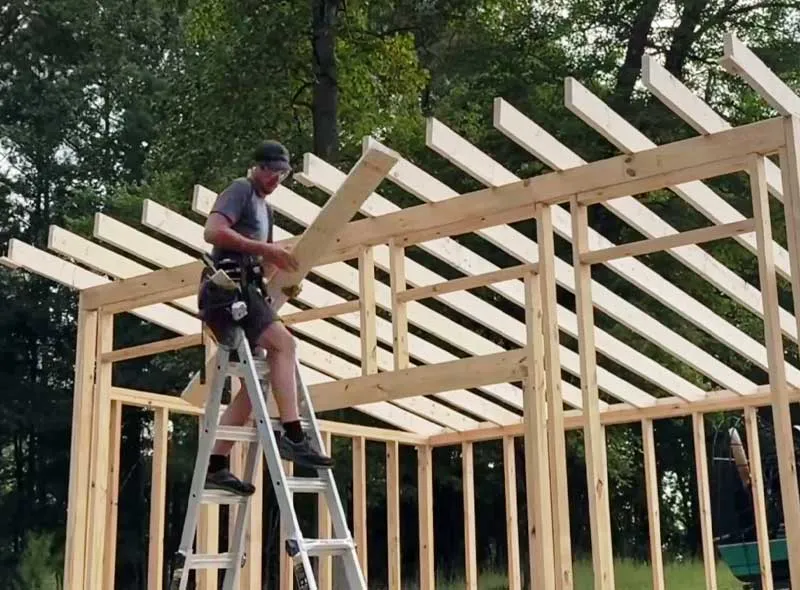
If you think a shed roof is just a lid to keep the lawnmower dry, I’ve got a $5,000 lesson to share with you. A few years back, a client insisted on a modern, ultra-low profile shed, basically a flat top with a 1-degree tilt. I warned him. I told him that water is a patient predator.
Six months later, after a standard Northeast autumn, I got the call. The plywood had delaminated, the waterproof membrane had ponded and failed, and his vintage motorcycle collection was sitting under a steady drip of tea-colored wood rot. We had to tear the whole roof off and start over.
Absolute Minimum – Never go below 1/2:12 (about 2.4°), and even then, only with specialized seamless membranes.
Sweet Spot for DIYers – 3:12 to 4:12. It’s steep enough to shed water effortlessly but shallow enough that you won’t slide off while nailing shingles.
Shingle Minimum – Don’t even think about asphalt shingles below a 2:12 pitch; you’re just asking for capillary action to suck water under the tabs.
Snow Load Factor – If you live in the Snow Belt, aim for 6:12 or higher to prevent structural collapse from heavy accumulation.
Getting the slope right is about the physics of shedding load and liquid. Whether you’re building a lean-to or a classic gable, the pitch dictates your roofing material and how many times you’ll be climbing a ladder in a rainstorm to unclog a gutter. Let’s take a deep dive into the mistakes and the field-tested realities of shed roof angles that most DIYers will find out too late.
Decoding the "Rise Over Run" Roof Slope Mentality
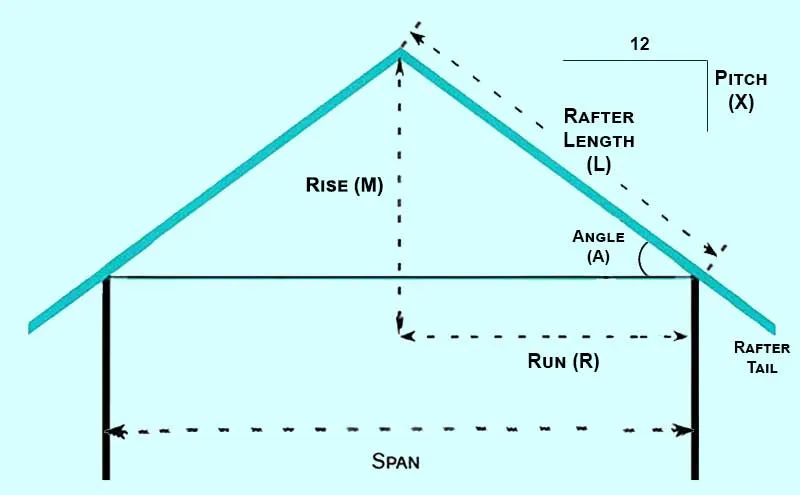
In the framing world, we don’t talk in degrees. If you walk onto a job site and say, i want a 15-degree roof, the old-timers will look at you like you have two heads. We talk in pitch or slope, expressed as a ratio of vertical rise over a 12-inch horizontal run. A 4:12 roof means for every 12 inches the roof travels horizontally, it rises 4 inches vertically.
Understanding this ratio is the foundation of your entire build. It dictates the length of your common rafters, the angle of your birdsmouth cuts, and, most importantly, how gravity interacts with precipitation.
When you increase the rise, you aren’t just making the shed taller; you’re changing the velocity of runoff. A steeper slope clears debris like pine needles and leaves much more effectively than a shallow one. I’ve seen 2:12 roofs fail not because of the rain, but because wet leaves sitting on the metal panels trapped moisture and eventually ate through the finish via galvanic corrosion.
Why does a 1:12 roof leak while a 4:12 stays dry? It’s not just more tilt. At low angles, water experiences surface tension and capillary action. Water will actually travel upward under a shingle or metal lap if the slope isn’t steep enough to let gravity overcome the liquid’s desire to cling to a surface. A steeper pitch ensures the kinetic energy of the falling water carries it over the edge before it can find a way inside the lap.
The geometry also affects your interior volume. If you’re building a workshop, a 6:12 pitch gives you massive overhead storage (the attic effect). If you’re just shoving a mower inside, a 3:12 lean-to keeps the profile low and avoids blocking your neighbor’s view, a common trigger for HOA disputes.
Relationship Between Pitch and Roofing Materials
You cannot separate the slope from the skin of the building. This is where most DIYers blow their budget or ruin their build. I once saw a guy put high-end architectural shingles on a 1:12 slope because he liked the look. He might as well have used a sponge.
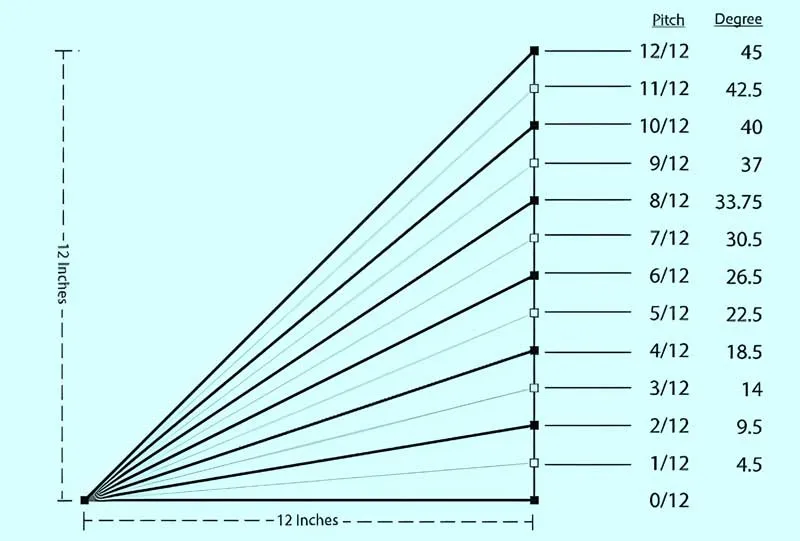
Flat/Low Slope (0.5:12 to 2:12): You are restricted to continuous systems. Think EPDM (rubber) or Roll Roofing (selvage edge). You need a torch-down or peel-and-stick membrane because there are no gaps for water to exploit.
Medium Slope (3:12 to 4:12): This is the domain of metal panels (ribbed or standing seam) and asphalt shingles. For shingles between 2:12 and 4:12, you must use a double layer of underlayment (ice and water shield is even better) to prevent wind-driven rain from backing up.
Steep Slope (5:12 and up): Now you can play with cedar shakes or decorative tiles. These materials rely entirely on a fast shed rate because they are porous or have large gaps between units.
Shingle Blow-Back
If you ignore the 3:12 rule for shingles, you’re gambling with wind. In a heavy storm, wind can push water vertically up the face of a shingle. On a shallow slope, that water only has to travel an inch or two to get over the top of the shingle and onto your decking. Once your OSB gets wet, it swells, and the shingles start to potato chip or curl. It’s a death spiral for your roof.
When you’re on a budget, 3:12 is your best friend. It allows for standard metal roofing, the Pro-Rib or Tuff-Rib stuff you find at Menards or Home Depot, without needing expensive mechanical seaming tools. It’s the sweet spot of cost vs. performance.
Dealing with the Great White Load: Snow and Structural Integrity
If you’re building in a place like Minnesota or Maine, your roof slope isn’t just about water; it’s a safety feature. Snow is heavy, really heavy. Wet snow can weigh 20 pounds per cubic foot. On a 10×12 shed with a low-slope roof, a heavy storm can put 2,400 lbs of weight on your rafters.
Pitch vs. Lumber Price
Increasing your pitch from 4:12 to 8:12 will increase your rafter length by about 20%. That means more lumber and more expensive sheets of plywood. However, the hidden cost of a low-pitch roof in a snow zone is the potential for structural failure or the need for a Snow Roof (a secondary structure). Spending an extra $200 on longer rafters now is cheaper than replacing a collapsed shed in five years.
A steeper pitch, like 8:12 or 12:12, encourages snow shedding. On a metal roof with a steep pitch, the snow will eventually slide off in a giant whoosh (which, incidentally, is why you shouldn’t put your door directly under the eaves on a steep metal roof). If your slope is too shallow, the snow sits there, goes through a freeze-thaw cycle, and creates an ice dam. This is a ridge of ice at the edge of the roof that prevents melting water from escaping, forcing it back under your roofing material.
I’ve walked into sheds in late February where the rafters were literally bowing, and the door wouldn’t open because the frame was being crushed by snow weight. In every single case, the roof was a 2:12 or less. If you’re in a high-snow area, don’t go below 4:12 unless you’re planning on over-engineering your rafter spans with 2×8 or 2×10 lumber on 12-inch centers.
Lean-To vs. Gable Pitch Dynamics
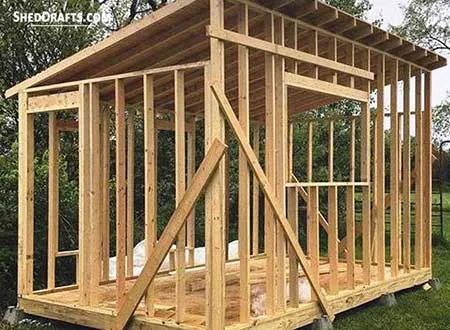
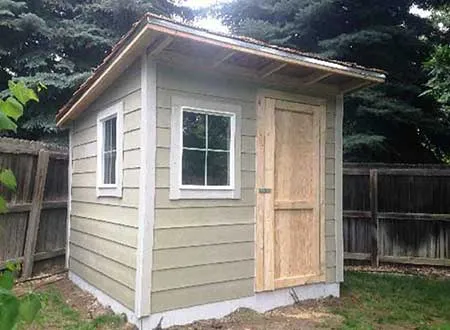
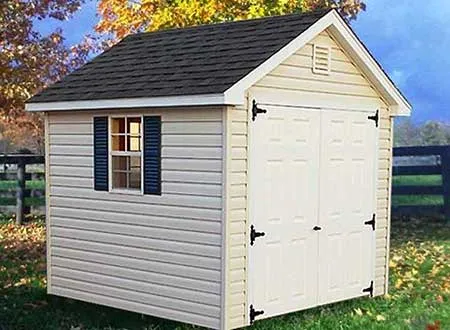
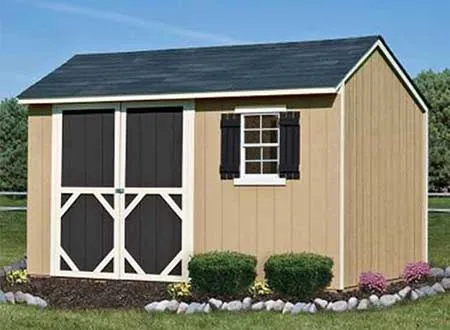
The style of your shed dictates how you calculate your slope. A Lean-To (Monopitch) roof is the easiest to build, but it’s the most at risk for slope issues. Because all the water is moving in one direction, the volume of water at the downhill eave is double what it would be on a gable roof of the same size.
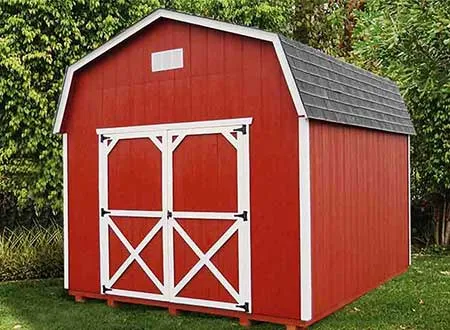
On a Gable Roof, the water is split between two sides. This means you can often get away with a slightly lower pitch because the tributary area (the amount of roof surface feeding one gutter) is halved.
I see this on Pinterest all the time: modern sheds with a roof that looks perfectly flat. Do not do this. Even if you want that modern look, you need a hidden slope. I usually frame these with a 1.5:12 slope and then use a tall facia board to hide the angle. From the ground, it looks flat. From the birds-eye view, it’s a functional drainage system. If you build it truly flat, the plywood will sag between the rafters over time, creating micro-ponds that will rot through any material eventually.
Will This Roof Leak? Quiz
Use this tool to determine if your planned slope is a Go or a No-Go before you buy a single 2×4.
- What is your primary roofing material?
- A) Asphalt Shingles (Score: 3)
- B) Metal Panels (Score: 2)
- C) Rubber/EPDM (Score: 1)
- What is your planned pitch?
- A) 1:12 to 2:12 (Score: 1)
- B) 3:12 to 4:12 (Score: 3)
- C) 5:12 or higher (Score: 5)
- Do you live in a high-snow or high-leaf-drop area?
- A) Yes (Score: 1)
- B) No (Score: 3)
Total Your Score:
- 3–5 Points: DANGER ZONE. Your slope is too shallow for your materials or environment. You are at high risk for leaks and structural failure. Switch to a seamless membrane or increase the pitch.
- 6–8 Points: PROCEED WITH CAUTION. You are on the edge. Ensure you use Ice and Water Shield over the entire deck, not just the edges.
- 9+ Points: GOLD STANDARD. You have a healthy slope-to-material ratio. Your shed will likely outlast your house.
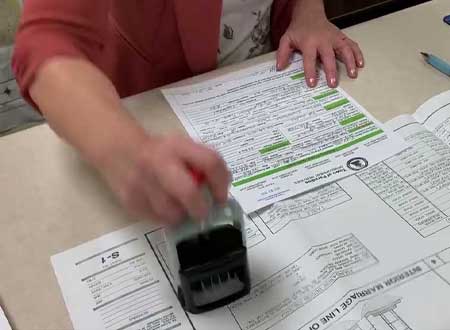
Local Codes and the Red Tape of Roof Height
In wildfire-prone areas (like parts of California or Colorado), your roof pitch can actually affect your insurance. Steeper roofs are less likely to catch ember wash, floating coals from a nearby fire, because the embers roll off rather than sitting and smoldering on a flat surface. Some local codes actually mandate a minimum pitch for this very reason.
In many jurisdictions, there’s a maximum height for accessory structures (sheds). This often sits around 10 to 12 feet. If you’re building a 12×16 shed and you decide on a 12:12 pitch, your roof peak is going to be 6 feet above your walls. If your walls are 8 feet high, you’re at 14 feet. Congratulations, you just earned a Notice of Violation from the city.
This is why many builders settle on 4:12. It provides enough slope for almost any material, keeps the total height within most legal limits, and is safe to walk on without a roof jack or harness (though I always recommend safety gear).
High-Peak Disaster
A buddy of mine built a beautiful Victorian-style shed with a 10:12 pitch to match his house. It looked great until the local building inspector drove by. Because the peak exceeded the 12-foot height limit for unpermitted structures, he had to either pay a $500 variance fee (which was denied) or cut the roof off. He ended up having to re-frame the entire top half to a 4:12 pitch. Always check your local setbacks and height caps before you make your rafters.
Ventilation Is The Hidden Requirement of Slope
The steeper your roof, the more attic space you have. That air needs to move. A low-slope roof (2:12) is notoriously hard to ventilate because there isn’t enough vertical stack effect to push hot air out of a ridge vent. In these cases, you often need power vents or turbine vents.
Condensation Rot Is A Roof-Killer
I’ve seen sheds that were perfectly waterproof from the outside, rotting away from the inside. If you have a low-slope roof with no ventilation, rising moisture from the ground or your stored equipment, like a lawnmower with a warm engine, hits the cold underside of the roof sheathing and turns into water. It drips back down, creating a false leak. A steeper pitch gives that moisture somewhere to go.
On roofs with a pitch of 6:12 and above, hot air naturally rises toward the peak. By installing soffit vents at the bottom and a ridge vent at the top, you create a natural chimney. This keeps the shed cool in the summer and, more importantly, prevents sweating in the winter.
How to Measure Slope Like a Pro (No Apps Needed)
While there are plenty of inclinometer apps, they are notoriously buggy on a job site when your phone screen is covered in sawdust. The old school way is more reliable.
Take a 12-inch level. Hold one end against the roof surface and level it. Measure the vertical distance from the other end of the level down to the roof. If that distance is 4 inches, you have a 4:12 pitch. It’s that simple.
How to Know You Nailed It
Water Test – Pour a bucket of water at the peak. It should move toward the edge immediately with no swirling or stagnant spots.
Drip Edge Alignment – Your drip edge should sit flush. If there’s a gap between the metal and the fascia, your pitch is likely bowed or inconsistent.
Shadow Line – Stand 20 feet back. The ridge should be a perfectly straight horizontal line. If it dips, your slope calculations were off, or your ridge beam is undersized.
On paper, your roof is 4:12. In reality, after the wood dries and the shed settles into the ground, it might become a 3.8:12. Always over-pitch slightly if you’re on the edge of a material’s limit. If shingles require a 3:12, frame it at 3.5:12 to account for future sagging or settling.
Wind Uplift: The Airplane Wing Effect
Low-slope roofs are essentially airplane wings. When high winds hit the side of your shed, they are forced up and over the roof. This creates a low-pressure zone on top of the roof, effectively sucking the roof off the walls. This is known as uplift.
Steeper roofs (7:12 and up) act more like sails. They take the wind head-on. While this puts more lateral (sideways) pressure on your walls, it’s actually easier to manage with standard bracing than uplift is.
Hurricane Ties Save Lives
Regardless of your pitch, if you’re in a windy area, use hurricane ties, such as the Simpson Strong-Tie H2.5A. They connect the rafter directly to the wall studs. On a low-slope roof, these are non-negotiable because the suction force can easily pull nails straight out of the top plate.
If you’re worried a steep roof looks too pointy or aggressive, install a shadow board (a second, slightly lower facia board). It breaks up the visual line and makes a 6:12 roof look more like a 4:12 from the street. It’s a classic carpenter’s trick for keeping the curb appeal while keeping the structural benefits of a steep slope.
Golden Rule of Roof Overhangs and Pitch
If there is one thing that separates a big-box shed and a master-built shed, it’s how the overhang interacts with the slope. Most beginners think the overhang is just decorative. It isn’t. Its job is to move the splash zone away from your foundation. On a low-slope roof (2:12 to 3:12), water doesn’t shoot off the edge; it tends to dribble. If you have a 1-inch overhang, that water is going to run right down your siding, rotting your sill plates in three seasons.
Golden 1:4 Ratio
For every 4 inches of vertical rise in your pitch, you should have at least 1 inch of horizontal eave overhang to protect your siding. For a 4:12 roof, aim for a minimum 12-inch overhang. For an 8:12 roof, you can go out to 16 or 18 inches. This keeps the drip line far enough away that splash-back doesn’t soak the bottom of your T1-11 siding.
On a steeper roof (6:12 and up), the water has velocity. It clears the edge of the roof and lands several inches away from the shed. However, a steep pitch with a long overhang creates a massive sail area for wind. I once built a 12×12 garden shed with a 10:12 pitch and 18-inch eaves. During a summer microburst, the wind caught those eaves and nearly flipped the shed off its skids because it wasn’t anchored to a concrete pad.
Capillary Creep Fiasco
Early in my career, I built a 2:12 lean-to and used a standard 1-inch drip edge. I thought I was being clean with the design. But because the slope was so shallow, the water didn’t have the momentum to break its surface tension at the edge. It literally curled around the bottom of the metal drip edge and traveled backward under the roof deck. Within two years, the fascia board was mush. I had to rip off the edge on my own dime, and install a custom kick-out flashing. The lesson: The shallower the pitch, the more aggressive your drip edge needs to be.
Calculating Effective Slope on Hips and Valleys
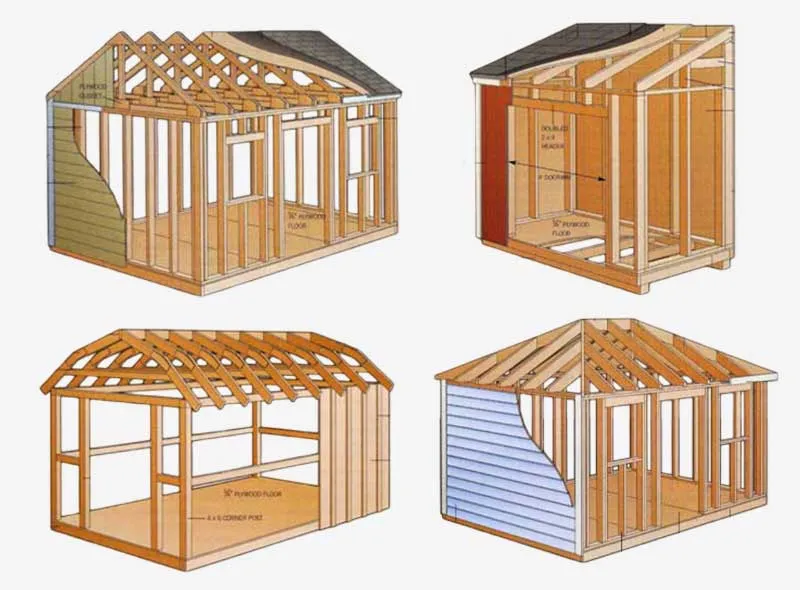
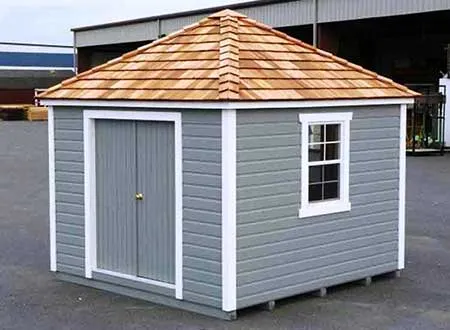
If you’re getting fancy and building a Hip Roof, where all four sides slope up to a point, your pitch math gets tricky. The Common Rafters might be at a 4:12 pitch, but the Hip Rafters, the ones on the corners, are actually at a shallower angle because they travel a longer distance to reach the same height.
This is called the effective slope. If your main pitch is 4:12, your hip rafter is actually traveling at roughly a 4:17 pitch. Why does this matter? Because if you’re using shingles, the valley or hip becomes the weakest point for water penetration. Water moves slower in the valleys because the slope is physically less steep than the rest of the roof.
Talking to the "Better Half"
If you’re building this for a spouse who wants a pretty roof, you need to explain the slope vs. maintenance trade-off. They might want a low-profile look, but you need to explain that a 2:12 roof means you will be up there every October, sweeping off wet leaves so the roof doesn’t rot. Sometimes, showing them a photo of a failed flat roof is the best way to manage expectations and get approval for that 6:12 pitch that will last 30 years.

Read Next
 Shed Roof Guide: How To Frame & Sheathe For Weatherproofing
 How To Install Shingles On A Shed Roof: Step-By-Step Guide
 Shed Floor Framing: Step-By-Step Guide To A Sag-Proof Base
 Shed Rafters vs. Trusses Comparison: Pro-Tested DIY Guide
 How To Build Shed Roof Trusses On A DIY Jig In One Weekend
 Shed Foundation Guide: 11 Durable Builds And Traps To Avoid
Framing-to-Finish Roadmap: DIY Guides For Every Step of The Build